
Michigan and Minnesota Wine Strategies Diverge
 During February, I attended both the Cold Climate Conference in St. Paul and Michigan Grape and Wine Conference in East Lansing. The “buzz” at both shows was palpable. In both Minnesota and Michigan, the energy of growing wine industry filled the air with an optimistic aroma.
While the mood was similar, the approach of Michigan and Minnesota towards wine is quite different. Michigan is now winning major wine contests for vinifera wines made near Lake Michigan. Michigan also has skillfully integrated wine and tourism with a top quality ad campaign.
As Michigan wine stands on the threshold of national and international acceptance, the challenge is establishing a signature variety. Michigan Riesling is now world-class, but other regions laid claim to this grape long before it was planted in the Wolverine State.

Finding an old world varietal that grows well in Michigan and has not been branded somewhere else is a challenge. At the Michigan Conference, there was discussion about Pinot Blanc becoming the Michigan hallmark varietal.
Other vinifera grapes, like Rhone and Northern Italian varietals, grow well in Michigan too. However, the accepted flavor profile of these wines are implanted firmly in the preexisting tastes of wine consumers. Does it make sense to constantly explain to wine drinkers why Michigan Pinot Noir or Pinot Gris does not taste like what they are accustomed to?
On the other hand, wine and beverage preferences change continually and a new generation of wine drinkers is known to like to experiment.
Michigan grape growers also like to experiment. There are at least fifty varieties of wine grapes growing in Michigan currently. While this diversity is great for the adventurous wine explorer, having too many labels can be confusing for the casual consumer.
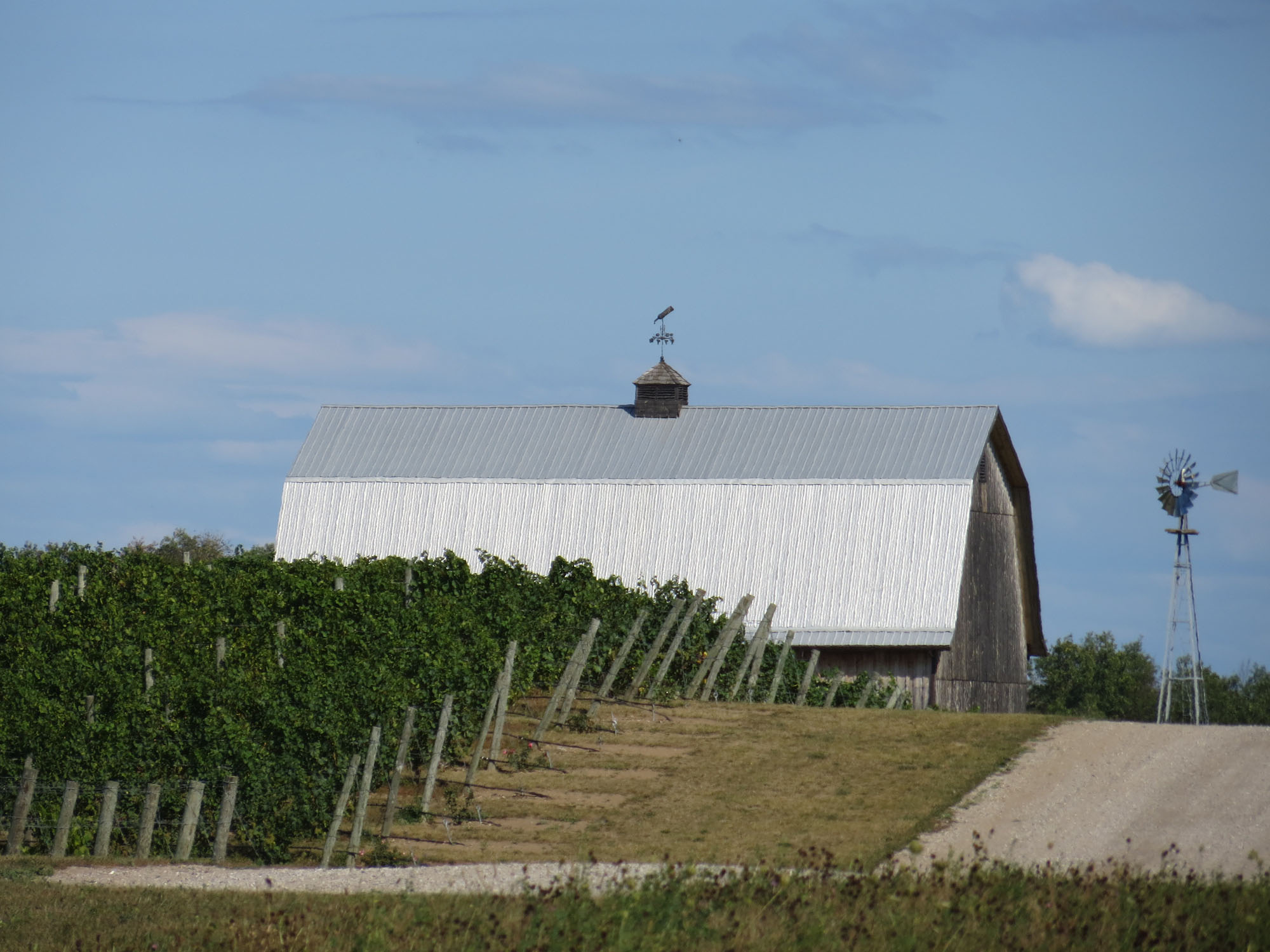
French Valley Vineyards, Leelanau Peninsula, Michigan
Minnesota has taken a different approach in regard to positioning its wine industry. Mainly because of geography and climate, Minnesota focuses on making wine from a handful of hybrid grapes. The majority of Minnesota wine is made from University of Minnesota or Elmer Swenson bred varietals like Marquette, La Crescent, St. Pepin and Frontenac.
There are only 58 wineries in Minnesota compared with 200 in Michigan. However, Minnesota sees potential for its grapes anywhere in the world where vinifera grapes cannot grow commercially. In so doing, Minnesota has positioned itself as the epicenter of cold climate grape growing and wine making in the Midwest and beyond. University of Minnesota grapes are now being grown across the northern tier of US states and the University reports that international licensing agreements are in the works.
So rather than compete in the shark invested waters of the vinifera wine ocean, Minnesota has chosen to swim in a relatively uncrowded hybrid market that more closely resembles a placid Northwoods lake. The market for hybrid wine is small now, but there is no debate about the rapidly improving quality of cold climate wines.
In his recent tasting room study for the Northern Grapes Project (which was conducted in Michigan), Dr. Dan McCole of Michigan State found that 65 percent of respondents had tasted cold climate wines and 42% “like them a lot.”
It’s amazing how far some of the better LaCresent and Marquette wines have come in the past few years. These are not “good cold climate hybrid wines,” they are just good wines period. Baby boomers generally don’t drink “unusual” wines, but younger wine drinkers are finding these cold climates both approachable and delicious.
By concentrating on a relatively small number of cultivars, cold hardy winemakers can also focus their collective efforts more efficiently. I have never seen an industry with such cooperation. In the close knit cold climate winemaking community, information is shared freely among what are ostensibly competing wineries in an effort to lift the entire industry.
In Minnesota and Michigan, two different courses have been charted. Michigan is mostly now about vinifera; although there is a cold climate grape movement underway in the area around Petoskey and Charlevoix.
In Minnesota (and Wisconsin) the current challenge is to get more cold climate vines in the ground. However, the upper Midwest is only the tip of the proverbial iceberg in terms of where cold climate grapes can be grown. Minnesota can be the world headquarters of cold climate wine and grape production while the state’s own wine industry grows at comfortable pace.
The larger point is that both the Michigan and Minnesota approaches hold great promise for Midwest wine. Having a vision of the future is what creates the energy and excitement that drives people to go beyond current limits. Other Midwestern states are doing great things with their wine industries, but Minnesota and Michigan are both poised to soon become known for more than just “local wine.”


Nice article Mark. Very information and really summarizes the two different positioning strategies nicely.
And both strategies will work!
I think Minnesota seems like it’ll have an established state grape pretty quick here. Marquette has been the most planted variety for I think 5 years now, and it’s the one everyone writes about the most, and actually my personal favorite…